Bybit vs Binance Contract Comparison: Can Negative Maker Fees Really Let Retail Traders Make Money?

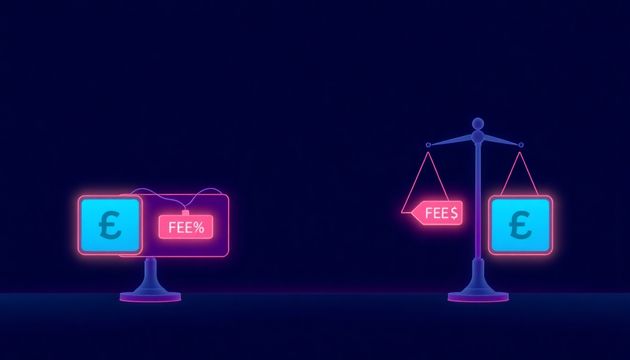
Futures are the most profitable—and most easily destructive—tool in crypto trading. Binance has always dominated retail, but Bybit is gaining momentum in the quant scene with its negative Maker fees (you place an order, the platform pays you). Which one is actually worth your money? This post breaks down six dimensions that retail traders care most about, without bias. Quick comparison table Dimension Binance Bybit USDT Perpetual Liquidity 🥇 Global #1 🥈 Global #2 Coin Perpetual Liquidity 🥇 Deepest Shallow Maker Fee 0.02% (positive) -0.01% (rebate) Taker Fee 0.05% 0.055% Minimum Order Size Usually $5-10 $1-5 (lower barrier) Funding Rate Market-driven Usually slightly lower Insurance Fund Tens of billions USDT Billions USDT Simplified Chinese Partial (compliance) Full New User Perks 20% fee rebate First deposit cashback + fee rebate Dimension 1: How negative Maker fees actually work Binance: ...

2026-04-19 · 5 min · 951 words · Panshi

Why quantitative trading strategies need residential IPs: Complete solution for Binance API account ban defense

While running Binance quant strategies on AWS Singapore, I ran into a series of “IP-related” pitfalls: geographic restrictions, API rate limiting, and account risk control freezes. The ultimate solution was to use IPRoyal residential IPs as the exit for API calls. This article lays out the principles and configuration in detail. IP Problems You’ll Hit with Quant Strategies Problem 1: Binance restricts API access from certain countries Binance blocks API access via IPs from the US, UK, Netherlands, and other regions: ...

2026-04-17 · 8 min · 1533 words · Panshi

Binance Funding Rate Arbitrage for Beginners: Complete Guide to Spot + Perpetual Hedging Strategies

💡 Note for mainland China users: Binance’s official website cannot be accessed directly from mainland China without a VPN. For CNY deposits, the platform doesn’t support direct bank transfers—instead, use peer-to-peer (C2C) channels to exchange USDT for CNY. Many people think “algorithmic trading” means chasing trends or grid trading, but funding rate arbitrage is a unique, low-risk strategy specific to crypto that can reliably generate 8–20% annualized returns. This article covers the mechanics and execution in detail. ...

2026-04-17 · 8 min · 1505 words · Panshi

Binance Gold Trading Tutorial: Complete Guide to XAU/USDT Spot and Futures Trading

💡 Mainland China Notice: Binance’s official website isn’t directly accessible from mainland China; you’ll need to use a VPN. Fiat deposits don’t support bank cards directly—you’ll need to use C2C channels (USDT ↔ CNY) to complete deposits. Gold is one of the world’s most important safe-haven assets. Trading gold used to require opening a futures account or buying gold ETFs, but now through Binance you can trade gold directly with USDT 24/7 with minimal barriers to entry. ...

2026-04-16 · 5 min · 1044 words · Panshi

Quantitative trading toolkit: Binance API + Grafana + complete automated alerting configuration

A Quant Strategy Needs More Than Just Code: Building Your Complete Monitoring & Alerting Stack Running a quant strategy requires far more than the strategy itself—you need a full suite of tools to execute it reliably, monitor its state, and get alerted when things go wrong. This post shares my complete tooling setup, from strategy execution through alerts. Overall Architecture Strategy Layer (Python) ↓ Trading Orders Binance API ↓ Execution Results State Files / CF KV ↓ Metrics Prometheus + node_exporter ↓ Storage Grafana Visualization ↓ Alert Rules Alertmanager → Telegram Strategy Execution Layer Tech Stack Language: Python 3.11 Binance SDK: python-binance Scheduled Tasks: APScheduler or system cron Dependency Management: requirements.txt + venv Directory Structure quant/ ├── strategy/ │ ├── main.py # Core strategy logic (signal generation + order placement) │ ├── signals.py # Indicator calculations (technical indicator library) │ └── risk.py # Position sizing, stop-loss logic ├── exchange/ │ └── binance_client.py # Binance API wrapper ├── monitor/ │ └── exporter.py # Expose state metrics in Prometheus format ├── config/ │ └── settings.py # Configuration (read from environment variables) └── run.py # Entry point Key Code: Exposing State Metrics While your strategy runs, write key metrics in Prometheus text file format for node_exporter to scrape: ...

2026-04-15 · 5 min · 878 words · Panshi

Binance futures trading risk management system: position sizing, stop-loss setup, circuit breaker mechanism

💡 Domestic note: Binance’s official site isn’t directly accessible from mainland China—you’ll need a VPN or similar network tool. Fiat deposits don’t support bank cards directly; most funding happens through C2C (USDT↔CNY) channels instead. In futures trading, the difference between a profitable strategy and a losing one often isn’t about whether your signals are right—it’s about whether you’re actually implementing risk management. ...

2026-04-15 · 6 min · 1206 words · Panshi

Binance API from Zero to First Trade: Complete Tutorial

💡 China users: Binance’s official site can’t be accessed directly from mainland China—you’ll need your own networking tools. Fiat deposits don’t support bank cards; the main method is C2C (USDT↔CNY) channels. The Binance API is your gateway to quantitative trading. If you want your strategy to execute automatically—auto buy, auto stop-loss, auto position monitoring—you need the API. ...

2026-04-15 · 4 min · 793 words · Panshi

How to save on Binance trading fees: Complete method to reduce from 0.1% to 0.045%

💡 Mainland China Notice: Binance’s official site is not directly accessible from mainland China — you’ll need to provide your own network tools to access it. Fiat deposits don’t support bank cards; deposits happen mainly through C2C channels (USDT ↔ CNY). Profitability in algorithmic trading is heavily determined by trading fees. A strategy executing 100 trades per month at 0.1% fees incurs 20% in costs on both sides. Reducing fees from 0.1% to 0.05% yields significant annual savings. ...

2026-04-10 · 4 min · 647 words · Panshi

Binance API security configuration: A complete guide to preventing theft in quantitative trading

💡 Mainland China Notice: Binance.com isn’t directly accessible from mainland China; you’ll need a VPN or network tool. Fiat on-ramps don’t support bank cards directly; the primary route is C2C (USDT↔CNY) trading. One of the biggest risks in live quant trading isn’t strategy losses—it’s a leaked API Key leading to account theft. Accidentally pushing your key to GitHub, a VPS getting compromised, or logs being exposed can wipe your account clean instantly. Any single mistake can be catastrophic. ...

2026-04-10 · 5 min · 863 words · Panshi

Pionex vs Binance Grid Trading Comparison: Which is More Suitable for You

⚠️ Registration Requirements: Pionex doesn’t support mainland China ID cards for KYC verification. You’ll need a valid ID from Taiwan, Singapore, Malaysia, the US, or similar jurisdictions. See Pionex’s official restricted regions notice. Grid trading looks the same on the surface, but the differences between Pionex and Binance are bigger than most people realize. I use both, so here’s my breakdown of how to choose. ...

2026-04-06 · 3 min · 503 words · Panshi